A drilling and tapping machine is a critical piece of industrial automation equipment widely used in modern manufacturing industries. It is designed to perform both drilling and thread tapping operations in a single setup, improving production efficiency and precision. As manufacturing continues to evolve toward automation and high-volume output, the drilling and tapping machine has become an essential solution for metal processing, automotive components, electronics hardware, and custom machinery production.
In today’s competitive industrial landscape, companies rely on drilling and tapping machines to reduce manual labor, improve consistency, and achieve faster production cycles. Whether integrated into a CNC system or used as a standalone unit, this equipment plays a key role in non-standard automation solutions and precision machining lines.
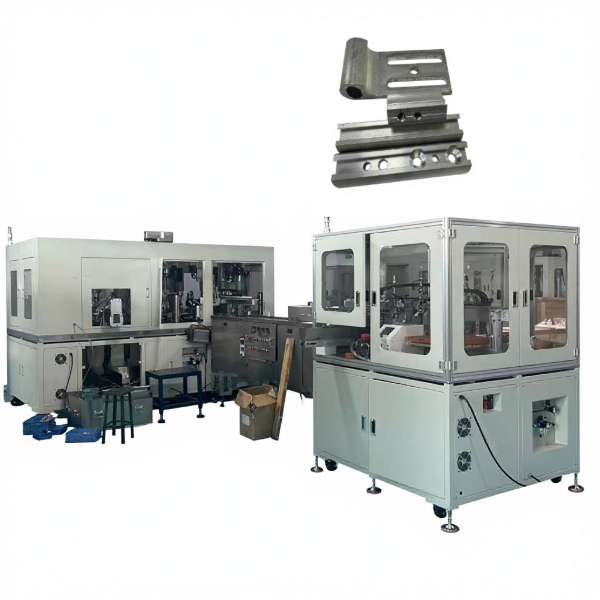
A drilling and tapping machine is a specialized industrial tool that combines two machining processes: drilling holes into a workpiece and cutting internal threads (tapping). Traditionally, these two operations required separate machines, but modern automation has merged them into a single efficient system.
This machine is commonly used in metalworking industries where precision, speed, and repeatability are required. It can be manually operated, semi-automatic, or fully integrated into CNC automation systems.
Drilling: Creates precise holes in metal or other materials
Tapping: Forms internal threads inside drilled holes
Automation: Reduces manual intervention and increases consistency
Modern drilling and tapping machines are designed to meet high-performance manufacturing demands. They offer advanced automation, improved accuracy, and higher production efficiency.
High Efficiency: Combines two operations in one cycle
Precision Control: Ensures accurate hole positioning and threading
Automation Ready: Easily integrates with CNC systems
Reduced Labor Cost: Minimizes manual operation requirements
Stable Performance: Suitable for continuous mass production
The drilling and tapping machine is widely used across multiple industries due to its versatility and efficiency. It is especially valuable in sectors requiring high-volume metal processing and precision components.
Automotive parts manufacturing (engine blocks, brackets)
Electronics hardware production
Aerospace component machining
Metal furniture and structural parts
Non-standard automation equipment production
For example, in automotive manufacturing, a drilling and tapping machine can process hundreds of engine components per hour with consistent accuracy, significantly reducing production time and improving product quality.
The working principle of a drilling and tapping machine is based on synchronized tool movement and automated control systems. The process typically involves positioning, drilling, tapping, and tool retraction in a continuous cycle.
Step 1: Workpiece positioning and clamping
Step 2: Drilling operation creates a precise hole
Step 3: Tapping tool cuts internal threads
Step 4: Tool retraction and cycle completion
Advanced machines may include CNC control systems, allowing operators to program multiple drilling and tapping sequences for complex parts.
Different types of drilling and tapping machines are available depending on production requirements, automation level, and budget. The table below compares the most common options used in industrial environments.
| Type | Automation Level | Best For | Cost Range |
|---|---|---|---|
| Manual Drilling Machine | Low | Small workshops | Low |
| Semi-Automatic Machine | Medium | Medium production | Medium |
| CNC Drilling and Tapping Machine | High | Mass production lines | High |
| Custom Automation System | Very High | Non-standard manufacturing | Custom pricing |
While drilling and tapping machines offer significant advantages, manufacturers should consider several factors before investment and implementation.
Initial investment cost for CNC and automation systems
Maintenance and tooling replacement requirements
Operator training for advanced control systems
Material compatibility and machining limitations
Proper machine selection based on production needs is essential to maximize return on investment and ensure long-term operational stability.
Q1: What materials can a drilling and tapping machine process?
It can process metals such as steel, aluminum, copper, and some engineering plastics depending on tool configuration.
Q2: Is CNC drilling and tapping better than manual machines?
Yes, CNC systems offer higher precision, automation, and efficiency, making them ideal for mass production.
Q3: Can it be used in custom automation systems?
Yes, drilling and tapping machines are commonly integrated into non-standard automation production lines.
The drilling and tapping machine is an essential solution in modern industrial manufacturing, offering a combination of speed, precision, and automation. From small workshops to large-scale production lines, this equipment significantly improves efficiency and reduces production costs. As industries continue to shift toward smart manufacturing, its role in CNC and custom automation systems will become even more important.
Choosing the right machine type based on production requirements ensures long-term performance and cost-effectiveness in industrial operations.
Looking for reliable non-standard automation equipment?
Contact us today for customized automation solutions tailored to your production needs.
The company's products include various full- automatic componentsproduction and processing equipment, full-automatic assemblyequipment, full-automatic production lines, robotics and visionintegration applications, etc